
Mont Albert,
Victoria.
Where the golf fairways once were, Federation homes now stand. Tightly held, heritage-lined, and birthplace of a world tennis champion.
Mont Albert, Victoria. What it actually is.
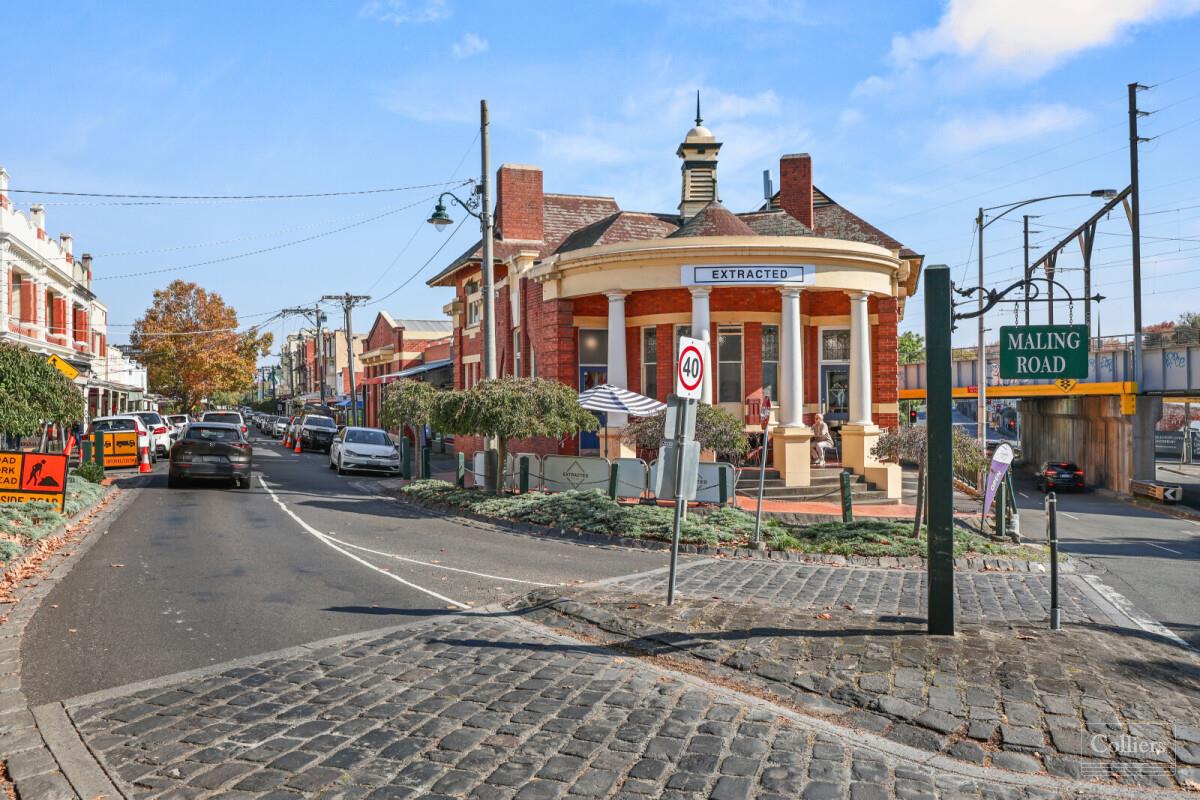
Mont Albert (postcode 3127) is a residential suburb 12 km east of Melbourne’s CBD, split across the Cities of Boroondara and Whitehorse. It is known for wide canopied streets, intact Federation and Edwardian housing stock, and Hamilton Street, a small village shopping strip that has held its character for over a century.
The median house price is approximately $2,506,000 (Cotality 2026). Properties are tightly held, with an average hold period of roughly 16.8 years and supply on market sitting at just 0.13%.
The suburb takes its name from its elevated position on a ridge, and almost certainly from Prince Albert, Queen Victoria’s consort. The first residential subdivision went up in 1887, though the 1890s depression slowed things considerably. What saved it was a single piece of community action: a local progress association lobbied to get a railway station built in 1891, before there were many houses to justify one. The station came first. The suburb followed.
Mont Albert is an inner eastern Melbourne suburb within two council areas. Its character was shaped by a handful of decisions across a 50-year period and has barely changed since. The streets between the railway and the tram line on Whitehorse Road are filled with Edwardian, English Domestic Revival, and Arts and Crafts homes on large blocks.
Postcode 3127 key data:
- 12 km east of Melbourne CBD · City of Boroondara and City of Whitehorse
- Population 4,948 (ABS 2021 Census)
- Median age 42 · 51.5% married · 69.6% owner-occupied
- Median monthly household income $11,980
- 13.3% Chinese ancestry · Professional occupations predominate
- Train: Union Station (Belgrave and Lilydale lines, opened 2023 replacing Mont Albert Station)
- Tram route 109 along Whitehorse Road (northern boundary, since 1915)
- Average hold period 16.8 years · Stock on market 0.13%
Fletchers Canterbury team: 250 Canterbury Road Canterbury VIC 3126 · 03 9836 2222
What defines Mont Albert
Mont Albert’s character was set in the late 1880s and has not changed. Wide, canopied streets. Large blocks. Intact Federation and Edwardian housing stock that moves reluctantly and commands a premium when it does. The suburb’s architectural variety is unusual for its size.
Hamilton Street is the social centre. Built from 1912 beside the old station site, it has held a village character for over a century with no major chains. The heritage-listed 1911 station building, preserved after the level crossing removal in 2023, now anchors the Mont Albert Village Plaza.
Quick suburb facts
- Postcode 3127 · Boroondara and WhitehorseOne of the few Melbourne suburbs straddling two councils
- $2,506,000 median house priceCotality 2026
- 0.13% stock on marketAmong the tightest supply in Melbourne’s eastern corridor
- 16.8-year average hold periodStructural signal, not temporary
- Heritage Hamilton Street village stripNo major chains; independent character retained
- Birthplace of Frank Sedgman AOWorld No. 1 tennis player, born here 1927
Mont Albert property market. 2026 data.
The median house price in Mont Albert (postcode 3127) is approximately $2,506,000 (Cotality 2026), with 3.21% annual growth across 50 house sales in the past year. A separate data point from HTAG puts the typical house price at $2,297,472 with gross rental yield of 1.89%.
The median unit price is around $800,000. Rental yield for houses sits at 1.87% with median weekly rent at approximately $835. Average days on market is 34 days. Auction clearance in measured periods has reached 100%. This is a capital growth market, not a yield play.
Mont Albert’s pricing comes down to a few structural facts that don’t change. Stock is genuinely scarce. Supply on market at 0.13% and inventory at 0.36 months are among the tightest figures in Melbourne’s eastern corridor. Properties here don’t move until owners decide to move, and when they do, buyers are waiting.
The 16.8-year average hold period tells you what current owners think of the market. Demand from Chinese-Australian professional families (13.3% of residents identify Chinese ancestry) and buyers targeting the Mont Albert Primary and Koonung Secondary catchments is consistent and structural.
Low rental yield means this suburb suits long-hold owner-occupiers and equity-backed investors, not those chasing cashflow.
The village strip. Nearly lost, permanently kept.
Hamilton Street is Mont Albert’s commercial centre. A short, walkable strip running south from the old station site, lined with cafés, a bakery, a butcher, a pharmacy, and a handful of independents. It opened in 1912 and hasn’t grown much since. That’s precisely the point.
What it is and where it is
The land Hamilton Street sits on was first subdivided in the 1880s, but the 1890s depression put a halt to things. By the time commercial development finally took hold in 1912 and 1913, the railways had been electrified, the suburb’s character was set, and Hamilton Street filled a local rather than a commercial role.
The heritage-listed station building, constructed in 1911, anchors the northern end of the strip. When the Level Crossing Removal Project closed Mont Albert Station in 2023, residents and traders lobbied to keep the building in place. It now stands on a plaza straddling the rail cutting, a concrete reminder of where the suburb started. The new Union Station opened nearby, merging Mont Albert and Surrey Hills services.
The strip retains no major chains. Independent cafés, bakery, butcher, pharmacy, and a handful of specialty retailers. Box Hill, five minutes east, handles everything else.
The station building
The 1911 station building on Churchill Street is heritage-listed. When the Level Crossing Removal Project announced the closure and merging of Mont Albert and Surrey Hills stations in 2023, residents and traders lobbied for the building to be retained near its original position. It was.
The building now anchors the Mont Albert Village Plaza, preserved above the rail cutting as a public meeting point. The new Union Station handles the trains. The old station handles the history.
Hamilton Street fast facts
- First shop: Pope and Moran, Grocers (1912)North-west corner of Mont Albert Road, the strip’s founding tenant
- Heritage-listed station building, 1911Preserved on plaza after level crossing removal
- No major chains on the stripVillage character retained across independent tenants
- Box Hill 5 minutes eastComprehensive shopping, diverse dining, Asian grocers
Mont Albert’s school catchment. What’s in zone and what’s adjacent.
School catchment zones drive buyer competition in Mont Albert, particularly for Mont Albert Primary. The suburb feeds strong government options locally and sits within reach of Canterbury’s private school cluster.
Mont Albert Primary School (est. 1908, heritage-listed 1917 building, 691 students as of 2014) is the government primary school and one of the most consistently sought-after primary catchments in Whitehorse. Its 1917 building is heritage-listed.
The suburb feeds into Koonung Secondary College (Years 7–12, located in Mont Albert North) and Box Hill Senior Secondary College (Years 11–12). Private options within close reach include Camberwell Grammar School and Camberwell Girls Grammar School, both on Mont Albert Road in neighbouring Canterbury.
Always verify current catchment boundaries for a specific property address at findmyschool.vic.gov.au, boundaries can be updated annually.
Mont Albert Primary School
Est. 1908. Heritage-listed 1917 building. 691 students (2014). One of the most sought-after primary catchments in the City of Whitehorse. Notable alumni include parliamentarians, academics, and a university vice-chancellor.
Co-ed Prep–6 Est. 1908Koonung Secondary College
Years 7–12. Located in Mont Albert North. The primary catchment secondary school for most Mont Albert addresses. Strong academic standing within the Whitehorse government sector.
Co-ed Years 7–12 GovernmentBox Hill Senior Secondary College
Years 11–12. Specialist senior campus with strong VCE results. Approximately 5 minutes from Mont Albert. A well-regarded government option for senior years in the eastern suburbs.
Years 11–12 5 min eastCamberwell Grammar & Girls Grammar
Both schools located on Mont Albert Road in neighbouring Canterbury. Boys Prep–Year 12 (est. 1886) and Girls ELC–Year 12 (est. 1920). Accessible from Mont Albert without travelling far from the suburb.
Boys Prep–12 Girls ELC–12Getting around. And what changed in 2023.
Mont Albert lost its own railway station in 2023. That sentence needs context. The Level Crossing Removal Project closed Mont Albert Station on 17 February 2023, merging it with Surrey Hills into the new Union Station. Trains still run. The station address just changed.
- Union Station, Belgrave and Lilydale lines, direct to CBD approx 25 minutes (opened 2023, replacing Mont Albert Station)
- Mont Albert Station heritage building retained on the Village Plaza above the rail cutting
- Tram route 109, Port Melbourne to Box Hill along Whitehorse Road (northern boundary, running since 1915)
- Multiple bus routes via Box Hill Bus Terminal, 5 minutes east
- The railway is responsible for the suburb’s existence, before the station opened in 1891, the area sat largely subdivided but empty
- North: Whitehorse Road, bordering Mont Albert North
- East: Elgar Road, bordering Box Hill
- South: Riversdale Road, bordering Surrey Hills
- West: Mont Albert Road, bordering Canterbury
- Located across City of Boroondara and City of Whitehorse
- 12 km east of Melbourne CBD, inner eastern corridor
- Eastern Freeway accessible via Elgar Road, approx 20–30 min to CBD by car
What Mont Albert doesn’t advertise about itself.
Every suburb has a version of its own story. Mont Albert’s is more interesting than the one in the real estate brochures.
The suburb’s streets were once a golf course
The Surrey Hills Golf Club established its first course here in 1892, playing across paddocks from Trafalgar Street to Whitehorse Road. Cows regularly ate the tee flags. The course ran until residential development forced the club out in 1907, when it relocated to East Camberwell and renamed itself the Riversdale Golf Club. The original 1900 clubhouse still stands at 30 Trafalgar Street as a private residence. Riversdale is now regarded as the second oldest golf club in Melbourne.
Frank Sedgman was born here, and was called a traitor for leaving
Frank Sedgman, born in Mont Albert on 29 October 1927, became the world’s No. 1 amateur tennis player in 1950, 1951, and 1952. He won 5 Grand Slam singles titles and, with Ken McGregor in 1951, completed the only men’s doubles Grand Slam in history. When Jack Kramer persuaded him to turn professional in 1953, the reaction was severe. He was banned from the Kooyong Lawn Tennis Club and the All England Club at Wimbledon. Australia felt betrayed. He was eventually made an Officer of the Order of Australia in 1979.
The suburb exists because residents lobbied for a station before anyone lived here
The 1887 land subdivision sat largely idle through the 1890s depression. Rather than wait for the market to recover, a local progress association petitioned for a railway station anyway. The station opened in 1891. It was the station that brought the residents, not the other way around. Infrastructure driving settlement rather than following it. That sequence is unusual in Melbourne’s suburban history.
Mont Albert Primary School’s heritage building dates to 1917
The solid-brick primary school building, completed in 1917, is heritage-listed. Victorian Places notes it as notable for producing parliamentarians, academics, and a university vice-chancellor among its former students. In 2014 it had 691 enrolled students, large for a suburb of Mont Albert’s size, and it tells you something about how keenly the catchment is sought.
There are no pubs here, and no McDonald’s nearby either
Mont Albert has no hotel or pub. Neither does Surrey Hills next door. You will need to drive to find one. This is not an accident. The suburb’s professional, family-oriented demographic has held this character for over a century, and it shows in what doesn’t exist here as much as what does.
The 109 tram has been running through here since 1915
The tram service along Whitehorse Road was established in 1915, connecting the suburb’s northern boundary long before cars were common. Route 109 still runs the same corridor today, from Port Melbourne to Box Hill. It is one of the longest-running tram routes in Melbourne, and for Mont Albert residents it remains the quickest option when traffic on the Eastern Freeway is slow.
The station building was saved by community pressure, not policy
When the Level Crossing Removal Project announced the closure and merging of Mont Albert and Surrey Hills stations in 2023, residents and traders lobbied for the 1911 heritage station building to be retained near its original position. It was. The building now anchors the Mont Albert Village Plaza, preserved above the rail cutting as a public meeting point. The new Union Station handles the trains. The old station handles the history.
Mont Albert is split across two council areas
The suburb straddles the Cities of Boroondara and Whitehorse. Residents on opposite sides of the suburb pay rates to different councils, fall under different planning schemes, and may have different rules about subdivision and heritage overlays. It is worth knowing your specific address and which council governs it before any planning enquiry.
Mont Albert from semi-rural paddocks to Melbourne’s eastern corridor.
The suburb’s character was shaped by a handful of decisions across a 50-year period and has barely changed since.
European settlement begins
The area is named for its elevated position and, most likely, for Prince Albert, Queen Victoria’s consort who died in 1861. Semi-rural farmland occupied by wealthy settlers who had moved east from the city.
Railway reaches the eastern suburbs
The line extends from Hawthorn to Camberwell in 1882, then east through Canterbury toward Box Hill. The railway corridor that would define the suburb’s shape is now established.
First residential subdivision
Land south of the railway line is subdivided for sale. The 1890s depression stalls development almost immediately. Most blocks remain empty for years.
Railway station secured
A local progress association lobbies successfully for a station. Mont Albert Station opens. The station brings in residents; the suburb starts to take shape.
Surrey Hills Golf Club established
About a dozen enthusiasts lay out a rough course across the paddocks now forming the suburb’s residential heart. Cows are a persistent hazard. The club later becomes Riversdale Golf Club when development forces relocation in 1907.
Mont Albert Primary School opens
The school opens following community petitions to the Education Department. Its 1917 heritage-listed building stands to this day and remains one of Whitehorse’s most sought-after primary catchments.
Heritage station building constructed
The station building on Churchill Street is completed. The Mont Albert Progress Association plants trees along the rail corridor. Steam trains run until electrification in 1922.
Hamilton Street shopping strip opens
Pope and Moran, Grocers, opens on the north-west corner of Mont Albert Road, the first purpose-built shop in the strip. Others follow along Hamilton and Churchill Streets over the next decade.
Frank Sedgman born in Mont Albert
The future world No. 1 tennis player arrives on 29 October 1927. His family relocates to Drouin during the Depression before returning to the eastern suburbs. He later becomes one of Australia’s greatest sporting figures.
Tram service begins on Whitehorse Road
Route 109 extends to the suburb’s northern boundary. Still running today from Port Melbourne to Box Hill, one of Melbourne’s longest-running tram routes.
Frank Sedgman turns professional
Persuaded by promoter Jack Kramer, Sedgman turns professional after winning 5 Grand Slam singles titles as an amateur. He is temporarily banned from Kooyong and Wimbledon. Australia takes it badly. He is eventually honoured with an AO in 1979.
Mont Albert Station closes
Level Crossing Removal Project merges Mont Albert and Surrey Hills stations into the new Union Station. The 1911 heritage building is retained on a plaza following community lobbying. Trains continue; only the name and precise entry changed.
People who have called Mont Albert home.
A world tennis champion. A consistent professional class. Mont Albert’s resident history reflects its character across 140 years.
Frank Sedgman AO
Born in Mont Albert on 29 October 1927. World No. 1 amateur tennis player 1950, 1951, and 1952. Won 5 Grand Slam singles titles and 9 Grand Slam doubles titles. In 1951 he and Ken McGregor became the only men’s doubles pair to win all four Grand Slams in a single calendar year. Member of the International Tennis Hall of Fame and Sport Australia Hall of Fame. Made Officer of the Order of Australia in 1979.
Melbourne’s eastern professional class
Mont Albert Primary School’s roll of distinguished alumni, noted by Victorian Places as including parliamentarians, academics, and a vice-chancellor, reflects the suburb’s consistent upper-middle-class character across 140 years. The pattern of professional families buying in and holding for a generation or more has not changed. The 16.8-year average hold period in 2026 data confirms it.
Everything people ask about Mont Albert.
Every answer is complete, sourced, and matches the FAQPage schema in this page’s header.
The median house price in Mont Albert (postcode 3127) is approximately $2,506,000 (Cotality 2026), with 3.21% annual growth across 50 house sales in the past 12 months. A separate data point from HTAG puts the typical house price at $2,297,472 with gross rental yield of 1.89%.
The median unit price is approximately $800,000. Average days on market sits at 34 days, and stock on market is an extremely tight 0.13%. Mont Albert is a long-hold capital growth suburb, not a yield play.
Mont Albert is 12 km east of Melbourne’s CBD.
By train via Union Station on the Belgrave or Lilydale lines, the commute to Flinders Street takes approximately 25 minutes. Tram route 109 along Whitehorse Road runs the full length of the suburb’s northern boundary toward the city. By car via the Eastern Freeway, accessible from Elgar Road, the CBD is roughly 20 to 30 minutes depending on traffic.
Mont Albert Primary School (est. 1908) is the government primary school for the suburb, and one of the most sought-after primary catchments in Whitehorse. For secondary, most Mont Albert addresses fall within the Koonung Secondary College zone (Years 7–12). Box Hill Senior Secondary College covers Years 11 and 12.
Private schools close by include Camberwell Grammar School and Camberwell Girls Grammar on Mont Albert Road in Canterbury, and Strathcona Baptist Girls Grammar. Always verify current zone boundaries at findmyschool.vic.gov.au before relying on any address for enrolment planning.
Mont Albert Station was closed on 17 February 2023 as part of Melbourne’s Level Crossing Removal Project. The station was merged with Surrey Hills Station into the new Union Station, which serves the same Belgrave and Lilydale lines.
The original 1911 heritage station building was retained following community lobbying. It now anchors a public plaza above the rail cutting on Churchill Street. Train services through the suburb continue uninterrupted. The station name and precise entry point changed, not the route.
Yes. Frank Arthur Sedgman AO was born in Mont Albert, Victoria, on 29 October 1927. He went on to become Australia’s first world No. 1 amateur tennis player, holding that ranking in 1950, 1951, and 1952.
He won 5 Grand Slam singles titles and 9 doubles titles. In 1951, he and Ken McGregor became the only men’s doubles pair in history to win all four Grand Slams in a single year. He is a member of both the International Tennis Hall of Fame and the Sport Australia Hall of Fame, and was made an Officer of the Order of Australia in 1979.
Hamilton Street is Mont Albert’s village shopping strip, running south from the old station site. The first purpose-built shop (Pope and Moran, Grocers) opened in 1912 on the north-west corner of Mont Albert Road.
The heritage-listed 1911 station building anchors the northern end after being preserved when the level crossing was removed in 2023. The strip retains independent cafés, a bakery, butcher, and pharmacy with no major chains. Box Hill, five minutes east, handles everything the strip doesn’t.
Mont Albert has delivered 3.21% annual capital growth on houses in the past 12 months, with stock on market at just 0.13% and an average hold period of 16.8 years. Both figures point to structural supply tightness, not temporary conditions. Properties average 34 days on market and auction clearance has recorded periods of 100%.
Rental yield at 1.87% is low, so buyers entering Mont Albert should be doing so with a long hold intention and equity to deploy, not as a cashflow investment. The suburb’s pricing is underpinned by school catchment demand, intact period housing stock, proximity to Box Hill’s amenity, and a professional demographic that has held consistent for generations.
“Mont” refers to its elevated position. The suburb sits on a ridge between Surrey Hills to the west and Box Hill to the east. “Albert” is almost certainly a reference to Prince Albert, Queen Victoria’s consort, who died in 1861.
Naming suburban streets and localities after the Royal Family was common practice in Victorian-era Melbourne. The suburb was formally established as a residential area following the extension of the railway in the early 1880s.
Mont Albert straddles two local government areas: the City of Boroondara and the City of Whitehorse. For planning enquiries, rates, and heritage overlays, the relevant council depends on your specific address.
This split occasionally affects school catchment determinations too. Checking your address at findmyschool.vic.gov.au and with the relevant council is worthwhile before proceeding.
Mont Albert and surrounds.
Mont Albert sits in Melbourne’s inner eastern corridor, bordered by suburbs with distinct characters and price points.
Thinking of selling in Mont Albert?
The Fletchers Canterbury team has worked these streets for decades. Complimentary appraisal, no obligation.
Data sources: Cotality/CoreLogic (median house price $2,506,000, annual growth 3.21%, 50 house sales, 34 days on market, median unit $800,000, 2026); HTAG (typical house price $2,297,472, hold period 16.8 years, SoM 0.13%, inventory 0.36 months, 2026); ABS 2021 Census (population 4,948, demographics); Victorian Places, Wikipedia, Riversdale Golf Club history, Tennis Fame (historical and biographical data). Published May 2026 · fletcherslocal.au/suburb/mont-albert