
Canterbury,
Victoria.
One of Melbourne’s three most expensive suburbs. Home to the Golden Mile, Maling Road, Victoria’s oldest private schools and a Nobel laureate who lived on its leafy streets.
Canterbury, Victoria. The definitive guide.
Canterbury (postcode 3126) is one of Melbourne’s most exclusive suburbs, located 10 km east of the CBD in the City of Boroondara.
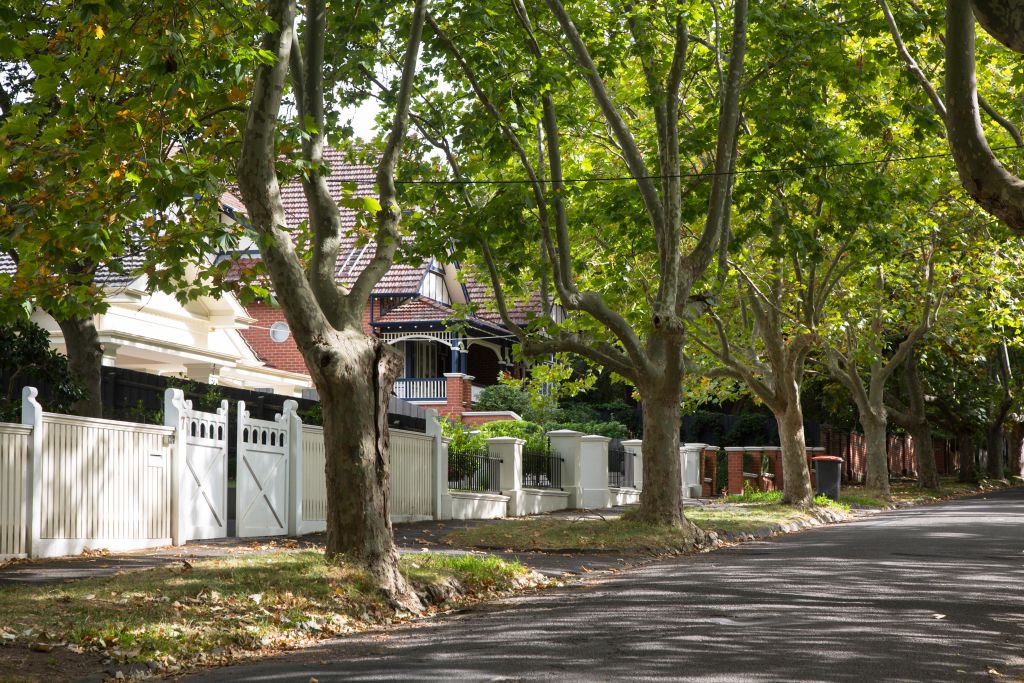
It is defined by wide tree-lined streets, heritage Victorian and Edwardian homes, a concentration of Victoria’s oldest private schools, and the Golden Mile, a stretch of Monomeath Avenue and its connecting avenues that has housed Melbourne’s business and political elite for over a century.
The median house price is approximately $3,687,500 (Woodards/Cotality 2026), with 22.6% annual capital growth. Canterbury consistently ranks in the top three most expensive suburbs in Melbourne by average house price.
The suburb borders Camberwell to the south and west, Surrey Hills to the east, Balwyn to the north, and Hawthorn East to the west. It is serviced by Canterbury and East Camberwell train stations, and tram routes 72 and 109.
Canterbury is a residential suburb in Melbourne’s inner eastern corridor within the City of Boroondara local government area. Its character was set in the late 1880s when Melbourne merchants and professionals built substantial homes here and commuted to the city by train.
That pattern, serious wealth, private schools, discreet streets, has been maintained for 140 years. The suburb’s famous tree-lined boulevards include century-old oaks on Monomeath Avenue, planted in 1911. The houses behind them range from intact Victorian frontages to grand Edwardian manors on double blocks.
Postcode 3126 key data:
- 10 km east of Melbourne CBD · City of Boroondara
- Population approximately 7,800 (ABS 2021 Census)
- Median age 46 · 57.3% of residents married
- Median household monthly income $14,372
- 65.6% born in Australia · 13.2% speak Mandarin at home
- Two train stations: Canterbury and East Camberwell (Lilydale/Belgrave lines)
- Tram routes 72 and 109
- Approximately 80% owner-occupied
Fletchers Canterbury: 250 Canterbury Road Canterbury VIC 3126 · 03 9836 2222
What defines Canterbury
Canterbury’s character was set in the late 1880s, when Melbourne merchants and professionals built substantial homes here and commuted to the city by train.
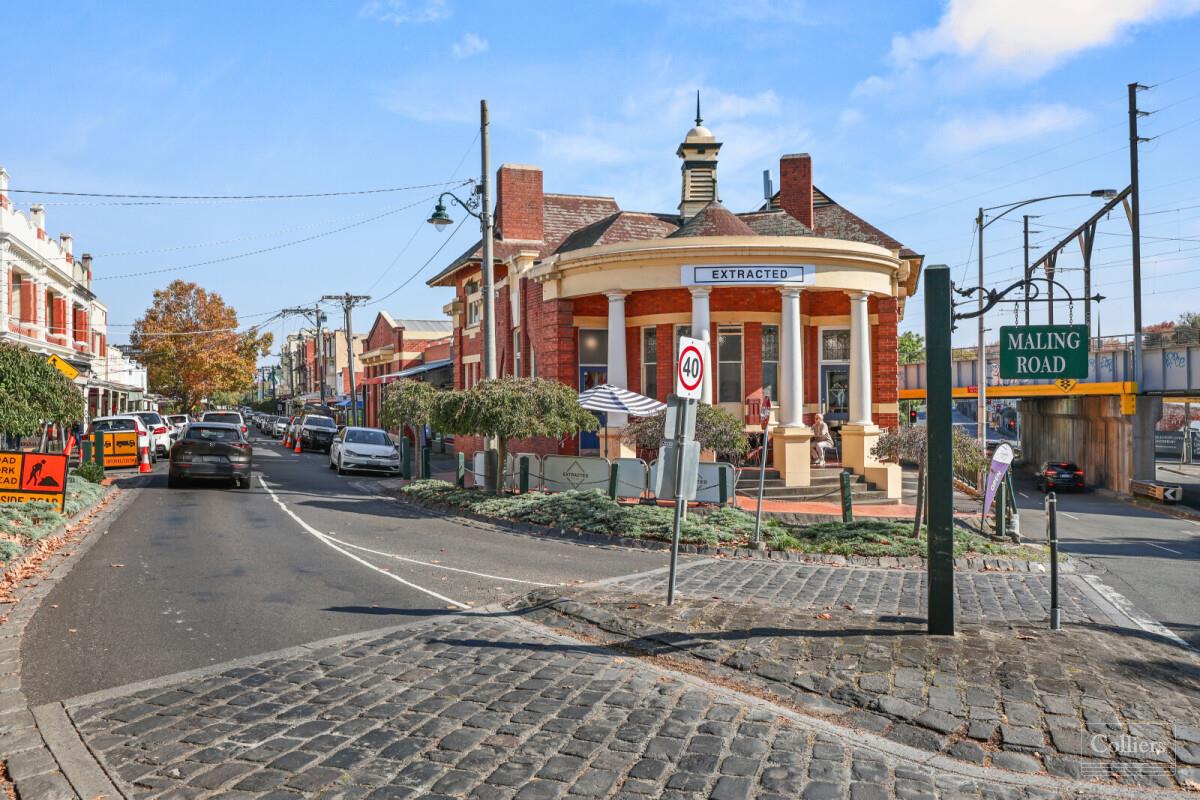
Maling Road is the suburb’s social centre. Built beside the railway station from 1907, it has been heritage-listed since the early 1980s and is one of Melbourne’s most intact early 20th-century shopping strips. The campaign that saved it from demolition in the early 1970s was one of the first successful heritage preservation campaigns in Melbourne.
Quick suburb facts
- Postcode 3126 · City of BoroondaraInner eastern Melbourne
- Top 3 most expensive suburbs in MelbourneConsistently, all sources
- $3,687,500 median house priceWoodards / Cotality 2026
- 6 schools in or immediately adjacent3 private, 3 government
- Heritage-listed Maling Road shopping stripMost intact early 20th-century precinct in Melbourne
- The Golden Mile, Monomeath AvenueCentury-old oaks, grand estates
Canterbury property market. 2026 data.
The median house price in Canterbury, Victoria (postcode 3126) is approximately $3,687,500 in 2026 (Woodards/Cotality), with 22.6% annual growth and 125 house sales. Cotality rolling data also reports $3,750,000 with 17.19% growth and 101 sales over the measured period.
The auction clearance rate for houses is 64.0% and average days on market is 55 days (Woodards 2026). The median unit price is $995,000, up 8.7% year-on-year.
Rental yield for houses is approximately 1.85% with median weekly house rent at $1,248. Canterbury is a long-term capital growth suburb, owner-occupiers make up approximately 80% of residents.
Canterbury’s price resilience comes from factors that are structurally hard to replicate: land scarcity, heritage planning overlays that prevent subdivision across most of the suburb, and a school precinct with no equivalent in Melbourne’s eastern suburbs.
Owner-occupiers make up approximately 80% of residents. When a property on Monomeath Avenue or Alexandra Avenue comes to market, it typically does so once in a generation. The period housing stock is largely intact and protected.
The 22.6% annual growth figure reflects a market running well ahead of broader Melbourne trends. Demand from Chinese-Australian professional families, Mandarin is spoken at home in 13.2% of Canterbury households, and interstate buyers relocating specifically for school access are structural contributors to this growth.
Monomeath Avenue and Melbourne’s most prestigious address.
Canterbury’s Golden Mile is not a marketing term. It is a specific place, with a specific history, that has defined the suburb’s reputation for over a century.
What it is and where it is
The Golden Mile is the stretch of Mont Albert Road running west from Balwyn Road, and the avenues that connect it south to Canterbury Road. The centrepiece is Monomeath Avenue, a tree-lined boulevard of century-old English oaks, planted in 1911, flanked by grand Victorian and Edwardian mansions set on large blocks behind ornate iron fencing.
The avenue takes its name from Edward Snowden’s 7-hectare estate, “Monomeath”, which occupied the site from the 1880s. When Snowden’s estate was subdivided and sold in 1900, notable figures including architect Percey Kernot moved in immediately. The road was sealed and planted with oaks in 1911.
Today, the streets of the Golden Mile house a concentration of legal, medical, business, and political figures that is without equal in Melbourne’s eastern suburbs. Properties on these streets rarely come to market, and when they do, they command prices meaningfully above Canterbury’s already elevated median.
The oaks
The century-old English oaks that line Monomeath Avenue were planted in 1911, after the road was paved. Now over 110 years old, they are the visual backbone of the Golden Mile and fall under heritage protection. In autumn, the avenue takes on a character that no other street in Melbourne replicates.
The estate they now front, Edward Snowden’s “Monomeath”, was subdivided and sold in 1900, with notable citizens including architect Percey Kernot moving in immediately. The Monomeath name carries to this day, now synonymous with the suburb’s most prestigious address.
Who lives here
The Golden Mile has housed Melbourne’s business, legal, and political elite continuously since the early 1900s. Tour groups have visited the avenue specifically to observe its architecture and history. Properties on the connecting avenues have been held by the same families for multiple generations in several cases.
When a Golden Mile property does come to market, it rarely does so publicly. Much of the transaction activity in this specific precinct happens through agent introductions to known buyers, a direct result of the depth of relationship that comes from operating in these streets for decades.
Canterbury’s village strip. Nearly lost, permanently saved.
Heritage-listed, independently operated, and one of the most intact early 20th-century shopping precincts in Melbourne.
Maling Road is the commercial and social spine of Canterbury, running parallel to the railway line near Canterbury station. The strip was built mostly between 1907 and the mid-1920s and is heritage-listed.
Its northern end is anchored by the former Malone’s Hotel (opened 1889, de-licensed 1920) and the former Canterbury Post Office (1908–10). At the southern end, Victorian-era shopfronts give way to Maling Place, a pedestrian laneway beside the station featuring murals depicting the history of the precinct.
The strip nearly didn’t survive. By the 1960s, a developer with plans to build a large supermarket owned most of the strip. Community action in the early 1970s was one of Melbourne’s first successful heritage preservation fights. Today Maling Road is a destination of independent cafés, boutiques, homewares, and specialty food.
- Heritage-listed, proclaimed early 1980s
- Most buildings date from 1907 to mid-1920s
- Former Canterbury Post Office built 1908–10
- Malone’s Hotel opened 1889, de-licensed 1920
- Saved from demolition by community campaign, early 1970s
- One of Melbourne’s first successful heritage preservation fights
- Maling Place laneway features historical murals
- Walkable from Canterbury railway station
Canterbury’s school precinct. One of the most concentrated in Victoria.
School catchment zones are a primary driver of Canterbury’s property market. Both the private school cluster and the Canterbury Girls Secondary College zone attract significant buyer demand.
Canterbury is home to some of Victoria’s oldest private schools. Camberwell Grammar School (1886, boys, Prep–Year 12) and Camberwell Girls Grammar School (1920, girls, ELC–Year 12) are both Anglican independent schools on Mont Albert Road. Strathcona Baptist Girls Grammar is also in the suburb.
Government schools include Canterbury Girls Secondary College (established 1928, one of only five government all-girls secondary schools in Victoria), Camberwell High School (co-educational), and Canterbury Primary School.
The school precinct is a primary driver of Canterbury’s property market. Families in the $3M-plus buyer cohort specifically target this zone for school access. Always verify current catchment boundaries for a specific property address at findmyschool.vic.gov.au, boundaries can be updated annually.
Camberwell Grammar School
Founded 1886. Boys, Prep to Year 12. Approximately 1,300 students. Located on Mont Albert Road on the Golden Mile, has occupied this site since 1935. One of Victoria’s oldest Anglican boys’ schools.
Boys Prep–12 Est. 1886Camberwell Girls Grammar
Founded 1920. Girls, ELC to Year 12. Approximately 820 students. Its Junior School (Ormiston) traces its history to 1849, the oldest girls’ school on the Australian mainland. Relocated to the Canterbury site in 2007.
Girls ELC–12 Est. 1920Strathcona Baptist Girls Grammar
Independent Baptist girls’ school in Canterbury. Part of the private school cluster that makes Canterbury one of the most concentrated independent school precincts in Victoria.
Girls IndependentCanterbury Girls Secondary College
Established 1928. One of only five government all-girls secondary schools in Victoria. Years 7–12, approximately 775 students. Notable alumni include Rosé (Roseanne Park) of global K-pop group BLACKPINK.
Girls Years 7–12 Est. 1928Camberwell High School
Government coeducational secondary school serving Canterbury and the surrounding Boroondara area. Strong academic reputation within the government sector.
Co-ed Years 7–12 GovernmentCanterbury Primary School
The local government primary school for Canterbury, opened 1908 after community petitions to the Education Department. Situated in the heart of the suburb.
Co-ed Prep–6 Est. 1908Getting around. And where Canterbury sits.
- Canterbury Station, Lilydale and Belgrave lines, direct to CBD approx 25 minutes
- East Camberwell Station, Lilydale and Belgrave lines; opened 14 May 1900
- Tram route 72, Camberwell Junction to Kew via Burke Road and Canterbury Road
- Tram route 109, Port Melbourne to Box Hill along Whitehorse Road (northern boundary)
- The railway is responsible for the suburb’s existence, before the line opened in 1882–83, the area was semi-rural
- North: Mont Albert Road, bordering Balwyn and Mont Albert
- West: Burke Road, bordering Camberwell and Hawthorn East
- East: Chatham and Highfield Roads, bordering Surrey Hills
- South: Riversdale Road, bordering Camberwell
- Located within City of Boroondara local government area
- 10 km east of Melbourne CBD, inner eastern corridor
- Adjacent to Canterbury Gardens and Boroondara Park
What Canterbury doesn’t advertise about itself.
Every suburb has a version of its own story. Canterbury’s is more interesting than the one in the real estate brochures.
A Nobel laureate lived here
Sir Frank Macfarlane Burnet, who won the Nobel Prize in Physiology or Medicine in 1960 for predicting acquired immune tolerance and developing the theory of clonal selection, was a Canterbury resident. He was also the first-ever Australian of the Year, and the Burnet Institute in Melbourne is named in his honour.
Rosé from BLACKPINK went to school here
Roseanne Park, known globally as Rosé, a member of K-pop group BLACKPINK, attended Canterbury Girls Secondary College before auditioning for YG Entertainment at age 16 and moving to Seoul. She came first among 700 participants at the audition. She is now one of the most-streamed artists in the world.
Maling Road was nearly demolished for a supermarket
In the 1960s, a developer with plans to build a large supermarket owned most of the Maling Road strip. The community campaign that stopped them in the early 1970s was one of Melbourne’s first successful heritage preservation fights. Without it, one of the most intact early 20th-century shopping strips in Australia would be a car park.
The suburb only exists because of one railway decision
Before the railway was extended to Camberwell in 1882, Canterbury was semi-rural farming land. Within five years of the line reaching Canterbury station in 1883, nearly all of the suburb was subdivided for housing. The suburb’s entire character follows from that single infrastructure decision.
The Canterbury Cobras football club was founded in 1881
The Canterbury Cobras, the local Australian Rules football club, was founded in 1881, making it one of Melbourne’s oldest community football clubs still in existence. It has worn red, gold and black since 1915, colours chosen to honour the Anzacs at Flanders Fields. The club won its first senior premiership in 1920.
Monomeath Avenue’s oaks were planted in 1911
The century-old English oaks that line Monomeath Avenue were planted in 1911 after the road was paved. Edward Snowden’s “Monomeath” estate was subdivided in 1900, with architect Percey Kernot and prominent citizen George Coghill among the first to build. The oaks, now over 110 years old, are heritage-protected.
Camberwell Girls Grammar’s Junior School is older than the school itself
The Ormiston Junior School, now part of Camberwell Girls Grammar, traces its history to 1849, making it the oldest girls’ school on the Australian mainland. It predates the founding of Camberwell Girls Grammar (1920) by 71 years. The two merged in 1964. Ormiston relocated to Canterbury when the new Junior School building was completed in 2007.
The post office is now a café
Canterbury Post Office opened on 22 November 1870, one of the earliest in the eastern suburbs. The current Maling Road building was constructed in 1908–10 and is now a café. The former hotel at the northern end of the strip was de-licensed in 1920 and has remained a ghost of its hospitality origins ever since.
One of the highest concentrations of private schools per suburb in Victoria
Within or immediately adjacent to postcode 3126, there are at least four independent or private schools, Camberwell Grammar, Camberwell Girls Grammar, Strathcona, and Trinity Grammar in nearby Kew, plus two significant government schools. This concentration within walking distance of each other is unusual anywhere in Australia and is a primary reason Canterbury commands a consistent price premium over adjacent suburbs.
The suburb’s Chinese-Australian community is a quiet but significant price driver
In the 2021 Census, 10.4% of Canterbury residents were born in China and 13.2% of households speak Mandarin at home. Demand from Chinese-Australian professional families specifically targeting the school precinct has been a structural contributor to Canterbury’s price growth for more than a decade, and continues to show in 2026 market data.
Canterbury from semi-rural to Melbourne’s most exclusive suburb.
The suburb’s character was shaped by a handful of decisions across a 50-year period, and has barely changed since.
Post Office established
Canterbury Post Office opens 22 November 1870. The area is semi-rural farmland at this stage, occupied by the well-to-do who had moved out from the city.
Canterbury Cobras founded
The local Australian Rules football club is established, one of Melbourne’s oldest community clubs still active today. It originally played on a ground where Strathcona now stands.
The railway arrives
The line extends from Hawthorn to Camberwell in 1882, then to Canterbury and beyond in 1883. Residential subdivisions accelerate immediately, within a decade, nearly all of Canterbury is subdivided.
First subdivision
Michael Logan creates the Claremont Park Estate, the first formal residential subdivision. Street names in the suburb still carry the names of these early landowners.
Camberwell Grammar founded
Camberwell Grammar School opens. Now one of Victoria’s oldest Anglican boys’ schools, on Mont Albert Road since 1935.
Monomeath Avenue subdivided
Edward Snowden’s 7-hectare estate “Monomeath” is subdivided and sold. The road is paved and lined with English oak trees in 1911.
Maling Road built
The commercial strip beside Canterbury station is developed. Most buildings constructed between 1907 and the mid-1920s. The former hotel, post office, theatre, and bank define the strip’s character.
Canterbury Girls Secondary founded
East Camberwell Domestic Arts School opens. It becomes one of only five government all-girls secondary schools in Victoria. The original Georgian Revival building incorporates two Moreton Bay figs from the original “Gwinda” estate.
Maling Road saved
Community action defeats demolition plans, one of Melbourne’s first successful heritage preservation campaigns. The strip is heritage-listed in the early 1980s.
People who have called Canterbury home.
A Nobel laureate. A global pop icon. Business leaders. Canterbury’s resident history is more interesting than its median price.
Sir Frank Macfarlane Burnet
Nobel Prize in Physiology or Medicine, 1960. Canterbury resident and Australia’s first-ever Australian of the Year. Won for predicting acquired immune tolerance and developing the theory of clonal selection. The Burnet Institute in Melbourne is named in his honour.
Rosé (Roseanne Park)
Global K-pop artist and member of BLACKPINK. Attended Canterbury Girls Secondary College before auditioning for YG Entertainment at 16 and moving to Seoul. Came first among 700 participants at the audition. One of the most-streamed artists in the world.
Percey Kernot
Notable architect, among the first to build on Monomeath Avenue after the 1900 subdivision of the Snowden estate. His residence helped set the architectural tone for one of Melbourne’s most prestigious streets.
Frank Cicutto
Former CEO of National Australia Bank. One of several corporate and financial leaders who have been Canterbury residents across successive generations of Melbourne’s business elite.
Melbourne’s professional & business elite
Canterbury has housed legal, medical, corporate, and political leaders since the 1880s. The pattern of discreet, established wealth in the suburb is consistent across 140 years. Tour groups have visited the Golden Mile specifically to observe the homes of Melbourne’s elite.
Billy Harvey MC
Australian Rules footballer who won the Military Cross in World War I and was killed during the Battle of Passchendaele. A Canterbury resident whose story is part of the suburb’s Anzac connection, reflected in the Cobras football club’s colours chosen to honour the fallen.
Everything people ask about Canterbury.
Every answer is complete, sourced, and matches the FAQPage schema in this page’s header.
The median house price in Canterbury, Victoria (postcode 3126) is approximately $3,687,500 in 2026 (Woodards/Cotality), with 22.6% annual growth and 125 house sales. Cotality rolling data also reports $3,750,000 with 17.19% growth across 101 sales over the measured period.
The auction clearance rate for houses is 64.0% and average days on market is 55 (Woodards 2026). The median unit price is $995,000, up 8.7% year-on-year. Rental yield for houses is approximately 1.85%.
Canterbury consistently ranks in the top three most expensive suburbs in Melbourne. It is a long-term capital growth market, owner-occupiers make up approximately 80% of residents.
Canterbury is 10 km east of Melbourne’s CBD.
It is serviced by two railway stations, Canterbury and East Camberwell, on the Lilydale and Belgrave train lines, providing direct access to the CBD in approximately 25 minutes. The suburb is also serviced by tram routes 72 and 109.
Canterbury is home to some of Victoria’s oldest private schools.
Independent schools: Camberwell Grammar School (1886, boys, Prep–Year 12), Camberwell Girls Grammar School (1920, girls, ELC–Year 12), and Strathcona Baptist Girls Grammar.
Government schools: Canterbury Girls Secondary College (est. 1928, one of only five government all-girls secondary schools in Victoria), Camberwell High School (co-educational), and Canterbury Primary School.
The school precinct is a primary driver of Canterbury’s property market. Families specifically purchase or rent within the zone for access to these schools. Always verify current catchment boundaries at findmyschool.vic.gov.au.
The Golden Mile is the stretch of Mont Albert Road running west from Balwyn Road, and the avenues connecting it to Canterbury Road, particularly Monomeath Avenue, Alexandra Avenue, Hopetoun Avenue, Victoria Avenue, and The Ridge.
Monomeath Avenue is lined with century-old English oak trees planted in 1911 and features grand Victorian and Edwardian mansions. The avenue was created from the subdivision of Edward Snowden’s “Monomeath” estate in 1900.
The Golden Mile has housed Melbourne’s business, legal, and political elite for over a century. Properties on these streets rarely come to market, and when they do, they command prices meaningfully above Canterbury’s already elevated median.
Maling Road is Canterbury’s main shopping and café strip, running parallel to the railway line near Canterbury station. It is heritage-listed, one of Melbourne’s most intact early 20th-century shopping precincts.
Most buildings date from 1907 to the mid-1920s. Community action in the early 1970s saved it from demolition, in one of Melbourne’s first successful heritage preservation campaigns. It was proclaimed a heritage area in the early 1980s.
Today it features independent cafés, boutiques, homewares, floristry, and specialty food. The pedestrian laneway Maling Place, beside the station, features street art murals depicting the precinct’s history.
Yes. Rosé, whose full name is Roseanne Park, attended Canterbury Girls Secondary College in Melbourne before becoming a global pop star.
She initially attended Kew East Primary School, then enrolled at Canterbury Girls Secondary College. In 2012, at age 16, she auditioned for South Korean record label YG Entertainment at an open audition held in Australia, coming first among approximately 700 participants. She dropped out of school, signed as a trainee, and moved to Seoul two months later.
Rosé went on to become a member of K-pop group BLACKPINK, one of the most-streamed groups in the world, and has released her own successful solo music. She is the most globally famous alumna of Canterbury Girls Secondary College.
Yes. Sir Frank Macfarlane Burnet was a Canterbury resident and one of Australia’s most eminent scientists.
He was awarded the Nobel Prize in Physiology or Medicine in 1960, jointly with Peter Brian Medawar, for the discovery of acquired immunological tolerance. He also developed the theory of clonal selection, foundational to modern immunology.
Burnet was also the first-ever Australian of the Year (1960). The Burnet Institute, a major medical research institute in Melbourne, is named in his honour. His work was conducted largely at the Walter and Eliza Hall Institute of Medical Research and the University of Melbourne.
Canterbury has delivered 22.6% annual capital growth on houses in the past 12 months (Woodards/Cotality 2026) and consistently ranks in the top three most expensive suburbs in Melbourne. The combination of land scarcity, heritage planning overlays, intact period housing stock, and persistent demand from families targeting the school precinct underpins long-term price resilience.
The auction clearance rate is 64.0% with average days on market of 55. Rental yields are low at approximately 1.85%, Canterbury is a long-term capital growth market, not a yield play. Buyers entering Canterbury are typically owner-occupiers with long hold intentions.
Canterbury Girls Secondary College (CGSC) is one of only five government all-girls secondary schools in Victoria. Its designated neighbourhood zone covers Canterbury, Camberwell, Surrey Hills, Balwyn, parts of Kew, and Hawthorn East.
The zone is a significant driver of property demand and pricing in postcode 3126. Families seeking access to a high-performing, government-funded, all-girls secondary school specifically purchase or rent within the zone.
Always verify current zone boundaries against a specific property address using the Victorian Department of Education’s Find My School tool at findmyschool.vic.gov.au, boundaries can be updated annually.
By the 1960s, Maling Road’s buildings were ageing and in need of repair. A developer who owned most of the strip had plans to demolish the Edwardian-era shopfronts and build a large supermarket, replacing surrounding housing with car parks.
Community action in the early 1970s forced Camberwell Council to substantially revise these plans. The campaign is now recognised as one of Melbourne’s first successful heritage preservation fights, predating many of the state-level heritage frameworks that now protect such precincts.
The strip was proclaimed a heritage area in the early 1980s. Without the community campaign, the precinct would almost certainly have been replaced with a supermarket car park.
Canterbury, Victoria takes its name from the city of Canterbury in Kent, England, a common practice in Victorian-era Melbourne where suburbs were named after significant English towns and cities by early settlers and administrators.
The suburb was officially established as a residential area following the extension of the railway in 1882–83. Before the railway arrived, the area was largely semi-rural farming land. The railway station, which opened under the name Canterbury, gave the suburb both its name and its defining character as a professional commuter enclave.
Canterbury and surrounds.
Canterbury is bordered by some of Melbourne’s most sought-after eastern suburbs. Each has its own market dynamics and buyer profile.
Thinking of selling in Canterbury?
The Fletchers Canterbury team has been selling in this suburb for decades. Complimentary appraisal, no obligation.
Data sources: Woodards/Cotality (median house price $3,687,500, annual growth 22.6%, 125 house sales, clearance 64.0%, 55 days on market, median unit $995,000, 2026); Cotality/CoreLogic rolling 12-month data (median $3,750,000, growth 17.19%, 101 sales); ABS 2021 Census (population, demographics); Victorian Places, eMelbourne, Wikipedia (historical data). Published May 2026 · fletcherslocal.au/suburb/canterbury